Skip to content
Onshift
Cart0

Reference — Werk en schoenen

Work and footwear, in numbers

Everything on this page is a measurement or a limit. It is the reference behind every product page: what terry height means, what fabric weight does and does not tell you, how shaft height relates to a boot collar, and where a sock stops being the answer.

Not protective equipment

These are socks, not personal protective equipment. They provide no protection against workplace hazards. If your job requires certified protective equipment, your employer must supply equipment that meets the applicable standard.

01The boundary

What these socks are not

This is the most important section on the site, so it comes first rather than last.

Not personal protective equipment

Regulation (EU) 2016/425 governs personal protective equipment. Nothing on this site falls within it. Our socks resist nothing: not impact, not cuts, not punctures, not static, not flame, not chemicals. We reference no protective standard number anywhere on this site, because no protective standard applies to a sock. If your work requires certified protective equipment, your employer must supply equipment that meets the applicable standard.

Not medical products

We make no claim that any product treats, prevents, relieves or improves any condition. We do not describe any product as suitable for any diagnosis. If you have a circulatory or nerve condition affecting your feet, that is a conversation with a doctor.

Not a guarantee of dry feet

A closed shoe worn for eight hours holds moisture, and a sealed rubber boot holds all of it. Thinner knits and moisture-moving yarns hold less water than heavy cotton does. That is the honest ceiling: less material to hold moisture, not dry feet.

Not blister prevention

Blisters come from friction, moisture, shoe fit and gait acting together. A seamless toe removes one common source of rubbing. It does not remove the others, and no sock we sell will stop a badly fitting boot from causing one.

02Footwear

Four shoes, four different problems

The shoe decides more than the sock does. Each of these fails in a different way, which is why the range is organised around them.

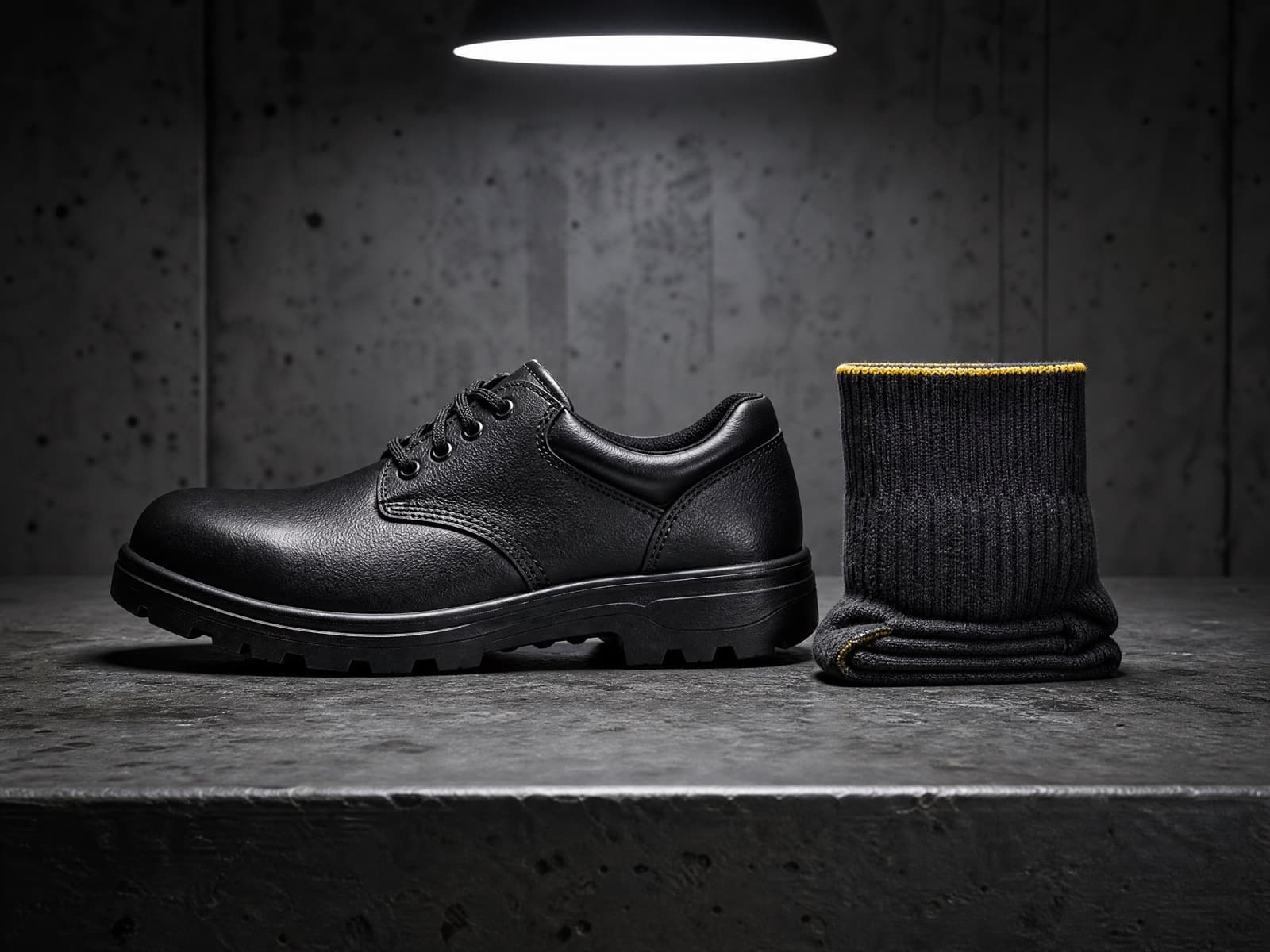
Rigid work shoe shown beside an Onshift sock on a workbench

Rigid work shoe

What it is
A hard, stiff sole that does not flex with your foot, and a low collar that sits at or below the ankle bone.
Why it matters
Because the sole does not flex, everything between it and your foot is doing the work. This is where terry height changes the most.
What to look at
3 to 5 mm terry, mid-crew shaft so the collar has fabric to sit against.
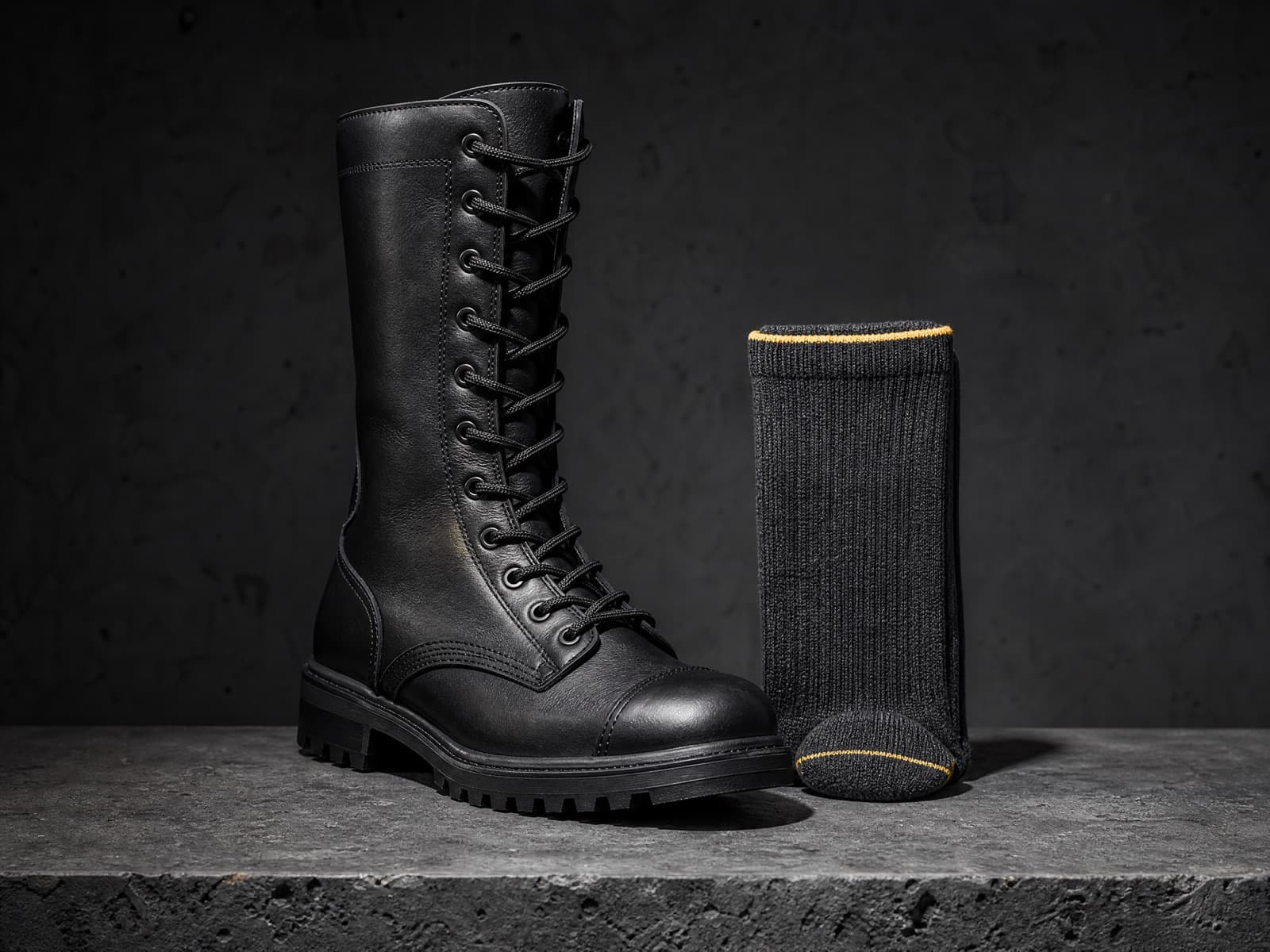
High lace-up work boot shown beside an Onshift sock on a workbench

High lace-up work boot

What it is
A tall shaft laced up over the ankle, usually stiff at the collar and at the shin.
Why it matters
The shaft rubs at the shin when you bend your ankle, and the collar presses at the top. Height and a denser shin panel matter more here than terry does.
What to look at
High shaft, 32 cm from the floor. Add terry only if the boot has the room.
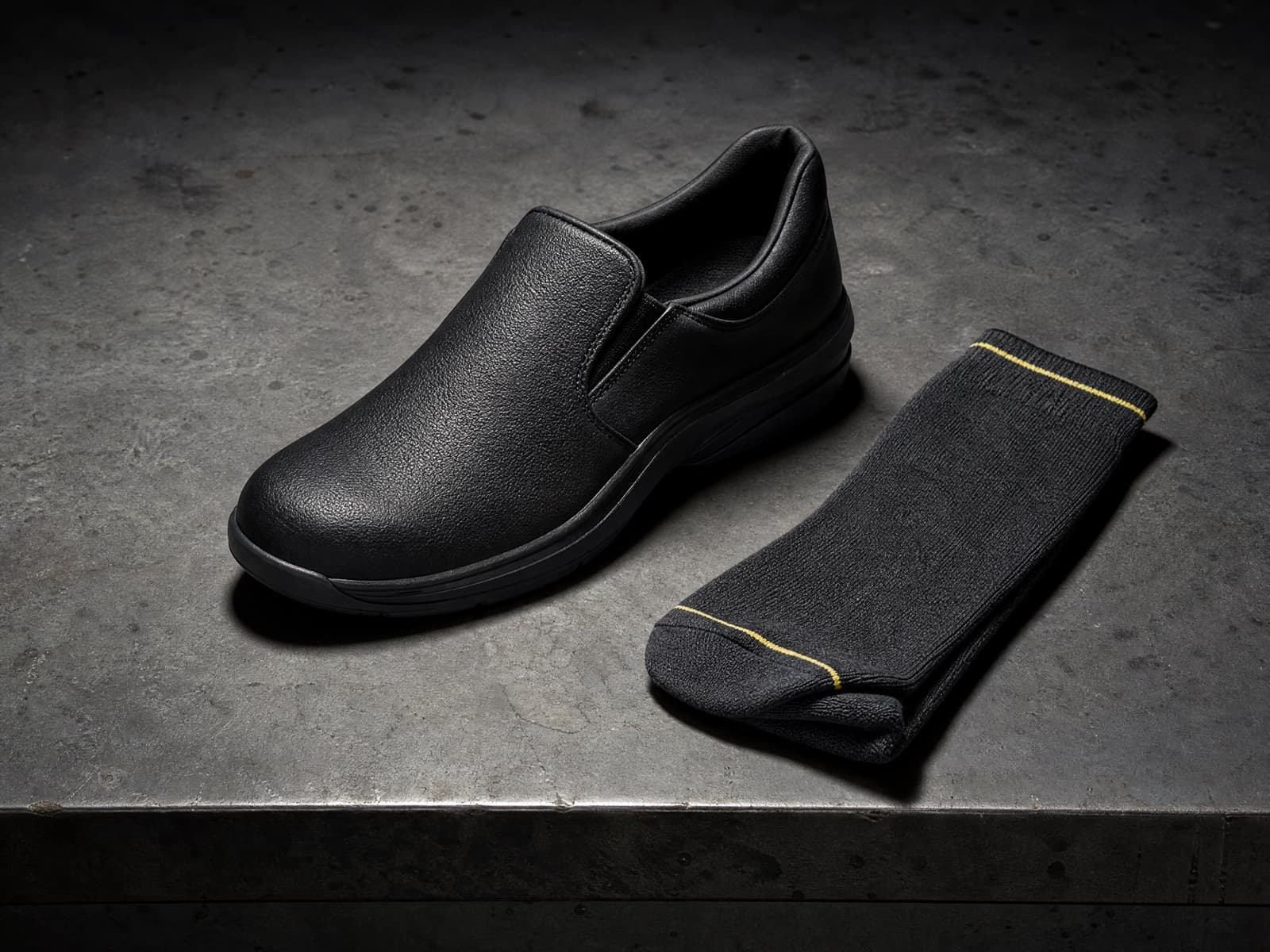
Soft-soled work shoe shown beside an Onshift sock on a workbench

Soft-soled work shoe

What it is
A flexible sole, a soft upper, usually slip-on. Kitchens, care work, warehouses.
Why it matters
The shoe already flexes with you, so terry is adding comfort rather than compensating for stiffness. Ventilation is usually the bigger question.
What to look at
0 to 3 mm terry, thinner knits, mesh panels in warm rooms.
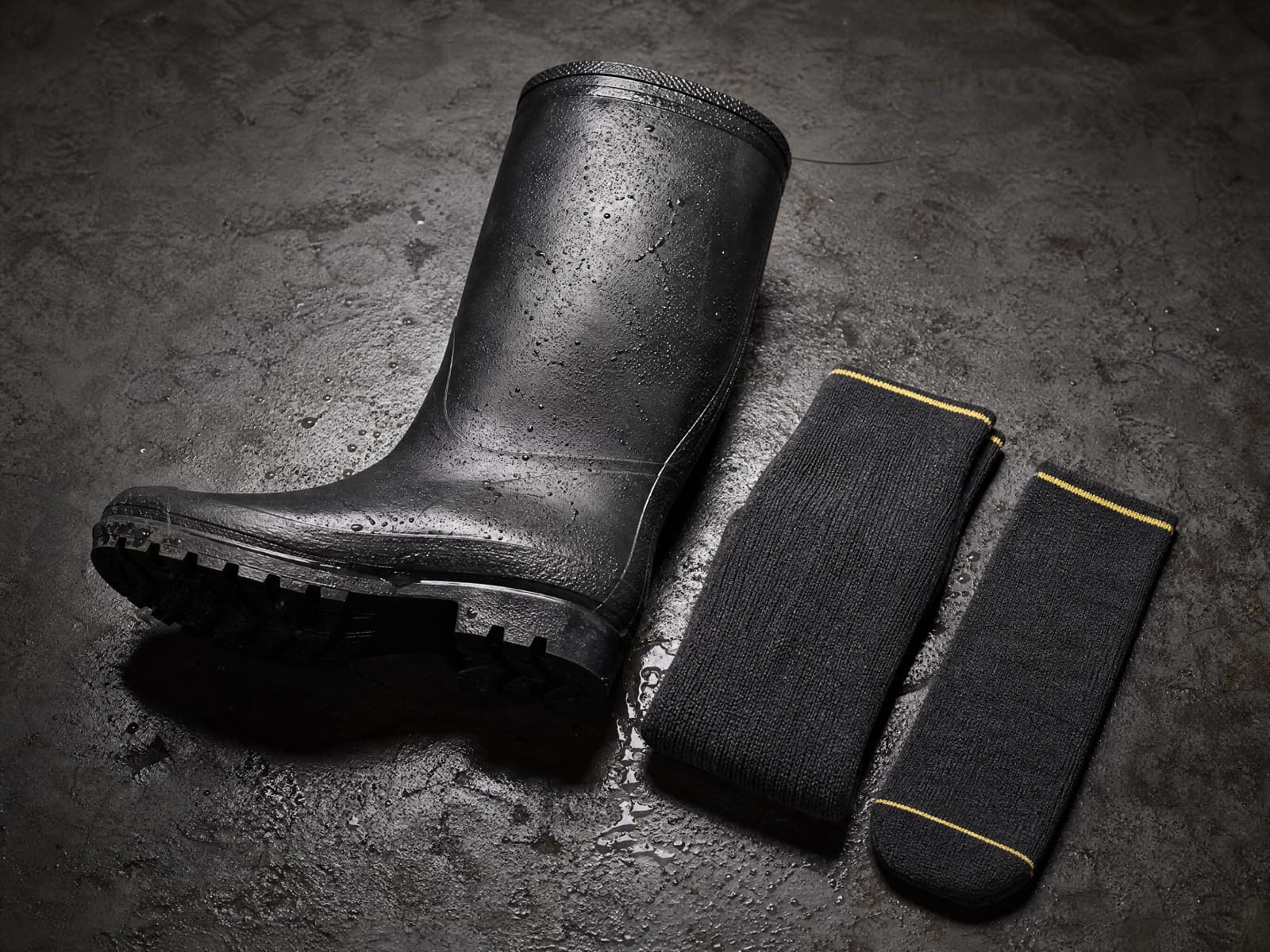
Rubber boot shown beside an Onshift sock on a workbench

Rubber boot

What it is
Waterproof, sealed, no ventilation of any kind.
Why it matters
Nothing leaves a rubber boot, including moisture from your own feet. Whatever you put inside gets damp over a full shift.
What to look at
A thin liner you can change at a break, under a separate outer sock. Not one thick pair.

03Cushioning

What a millimetre of terry means

Terry is a loop of yarn knitted into the inside face of the sock. Loop height is measured flat and uncompressed, which is the only way it can be measured consistently. Under load it compresses; a 5 mm loop does not hold 5 mm of air under your foot all shift.

0123452 mmA-01 B-013 mmA-02 E-034 mmA-08 B-035 mmA-06 B-08LOOP HEIGHT, MILLIMETRES — MEASURED FLAT AND UNCOMPRESSED
BALL + HEELHEEL ONLYFULL SOLEHIGHLIGHTED AREA = TERRY LOOP ZONE

2 mm

Noticeable but takes almost no room. Fits a shoe you already own.

3 mm

The most common answer for a standard standing shift.

4–5 mm

For long shifts in rigid footwear with room to spare. Close to half a size of fit.

Terry takes up room. If your shoe is already snug, more cushioning makes the fit worse, not better, and a tight shoe causes more problems than a thin sock does. Check the room you have before buying up the scale.

04Weight

Grams per square metre is a material figure, not a temperature rating

Weight in g/m² is the mass of a square metre of the knitted fabric. It is the one figure that can be measured the same way across every wool product here, which is why the cold line is built on it.

200g/m²280g/m²350g/m²420g/m²WEIGHT IS HOW MUCH MATERIAL IS THERE. IT IS NOT A TEMPERATURE RATING.

What weight does not tell you

Weight tells you how much material is there. It does not tell you how warm you will feel. Two people in the same 350 g/m² sock, in the same cold store, will report different things, because footwear, how much they move and their own circulation all change the answer.

A heavy sock in a boot with no spare room is also counterproductive: compress the fabric hard enough and you lose both the loft and the fit. Room in the boot comes first, weight second.

05Height and fit

Shaft height is measured from the floor

Shaft height is the distance from the floor to the top of the cuff, measured at EU 42–44 with the sock laid flat. Match it to where your footwear presses.

9 cmANKLE18 cmMID-CREW24 cmLONG CREW32 cmHIGH SHAFTMEASURED FROM THE FLOOR TO THE TOP OF THE CUFF, EU 42–44
REGULAR250 mmWIDE FIT271 mmGIRTH MEASURED AROUND THE BALL OF THE FOOT, EU 42–44

Cuff tension

Four tensions across the range: plain, ribbed, relaxed and extra-loose. If a tight cuff leaves marks on your leg, a looser top may be more comfortable. That is a comfort statement, not a health one.

Wide fit

Wide-fit products are knitted on a broader forefoot last, roughly 20 mm more girth across the ball at every size. Feet also spread through a long shift, which is why we suggest measuring at the end of the day.

06Layering

The rubber boot problem

This is the one condition on the site where the honest answer is that no single product solves it.

A rubber boot is sealed. Moisture from your feet has nowhere to go, so it accumulates through the shift regardless of what sock you wear. A thicker sock does not fix this; it holds more of the moisture and takes up more room.

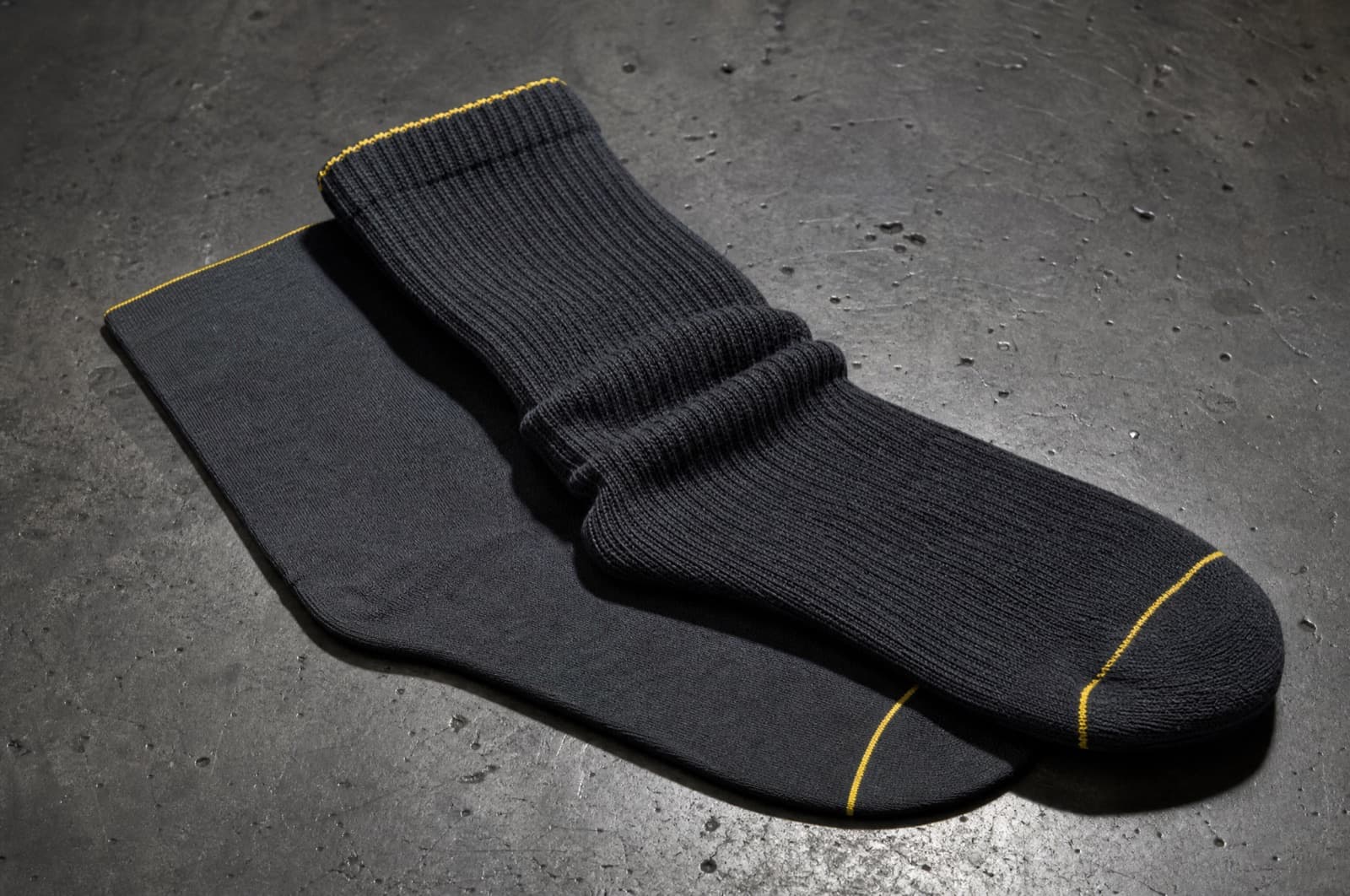
What actually helps is being able to change the layer next to your skin. A thin liner under a separate outer sock lets you swap the liner at a break in under a minute. Two thin pairs you can swap beat one thick pair.

SKINLINER — C-07, SWAP THIS ONE AT A BREAKOUTER — C-02 TO C-08, STAYS ONA thin liner sock and a thicker outer sock overlapping on a workbench to show the difference in thickness

07Sizing

Measure in millimetres

EU sizes vary between manufacturers. Foot length in millimetres does not. Every product page carries both.

LENGTH mmGIRTH mm1. STAND ON PAPER2. MARK HEEL + TOE3. TAPE THE BALL4. MEASURE BOTH FEETUSE THE LARGER FOOT. MEASURE AT THE END OF THE DAY.

Care, and what it costs you if you ignore it

  • Cotton products: wash at 40 °C, dry flat.
  • Wool and merino: wash at 30 °C on a wool cycle, dry flat. Wool shrinks when agitated in hot water and a pair washed hot will not come back to its original size. That is not a fault in the product.
  • Nothing goes in a tumble dryer. Heat damages elastane, and elastane is what holds the cuff and the fit.
  • Terry flattens with washing and with wear. That is the loop compressing over time, and it is normal.
Wear versus fault, in detail

Not protective equipment

These are socks, not personal protective equipment. They provide no protection against workplace hazards. If your job requires certified protective equipment, your employer must supply equipment that meets the applicable standard.

Anything on this page you would like explained further, email support@sockshousenl.baby or call +31 73 6496666.